
Water around a water heater is one of the most common calls we get, and the first question is always the same: where is it actually coming from? Water runs downhill and pools at the lowest point, so the puddle is often nowhere near the source. It might be the temperature and pressure relief valve or its discharge line, the drain valve near the bottom of the tank, the hot and cold connections on top, condensation on a cold tank, or a nearby pipe that has nothing to do with the heater. It might also be the tank itself, and that answer changes everything. In Atlanta, GA, we start every leak call by finding the true source.
Our diagnosis is methodical. We dry the area, look at the T&P valve and the end of its discharge pipe, inspect the drain valve, and follow the hot and cold lines up to the fittings on top of the tank. On gas units, we check the combustion chamber for water, which can point to condensation or, more seriously, a failing tank. If the relief valve has been discharging, we measure static water pressure and check for thermal expansion, since a closed plumbing system without an expansion tank can push pressure high enough to open the valve. Only then do we recommend a fix.
Most leaks are handled the same day we find them. We replace worn relief valves, swap plastic drain valves for durable brass ones, rebuild corroded connections, add or recharge an expansion tank, and install a pressure-reducing valve when street pressure is the real culprit. If the tank itself is leaking, there is no safe patch, and you will hear that from us directly along with your replacement options. We also help prevent the next leak from doing damage: a drain pan piped to a proper drain, a water sensor or automatic shutoff valve, and a clear label on the shutoff. For water heater leak repair in Atlanta, call (470) 200-7307.
Most of our service calls are for Water Heater Repair in Atlanta and Water Heater Replacement in Atlanta. Start there if you're not sure what you need.
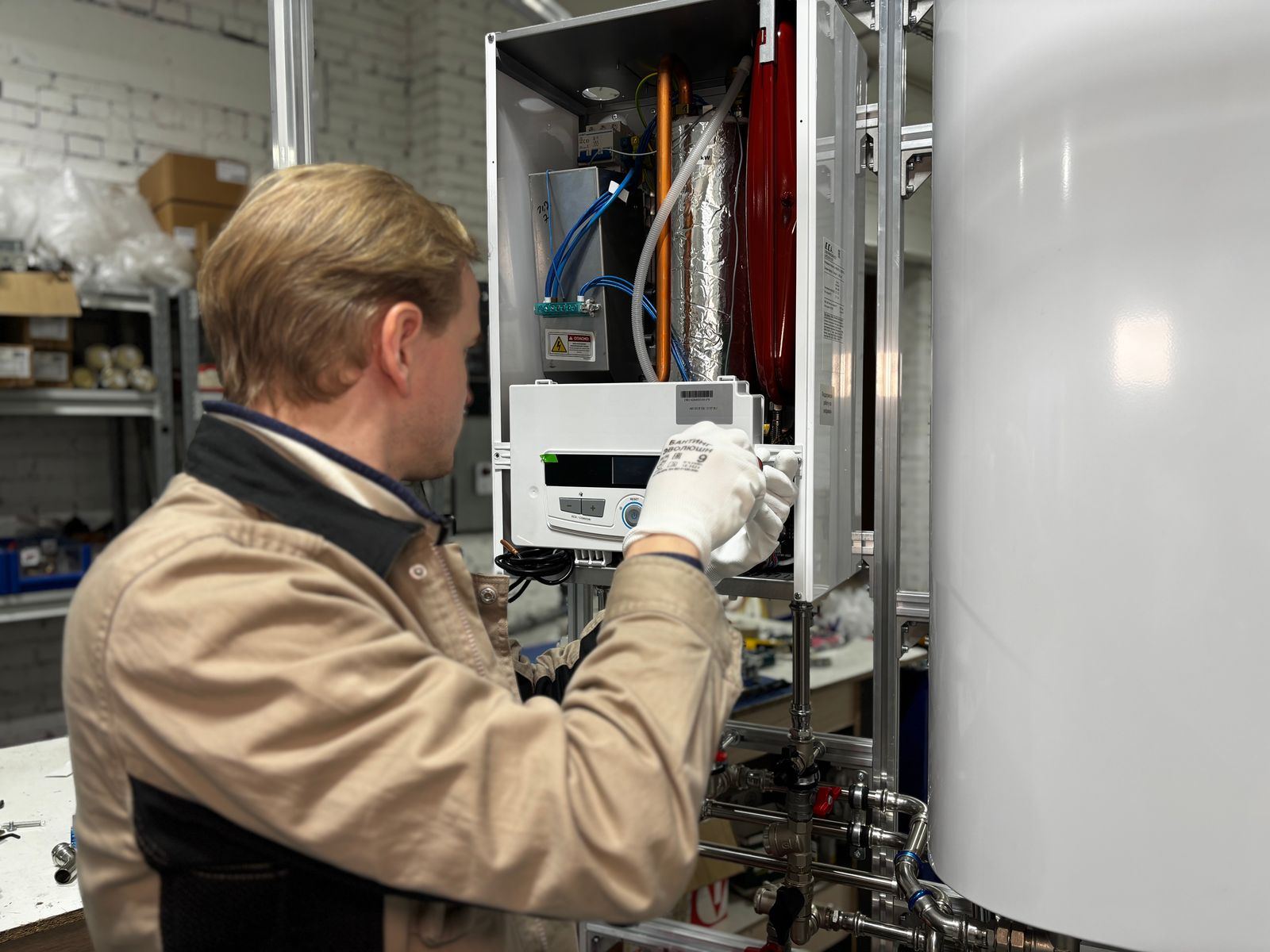
Signs You Need Water Heater Leak Repair in Atlanta
Catching a symptom early is often the difference between a quick part swap and a tank that gives out on the garage floor. These are the red flags our technicians see most often before a breakdown:
- A weeping drain spigot on the lower front of the heater
- Warped baseboards or stained drywall beside the water heater
- Moisture or mineral crust at the end of the relief valve pipe
- Dampness in the combustion area of a gas unit
- Brown hot water along with moisture around the tank bottom
- Rust, green corrosion, or white crust on the fittings at the top of the tank
- Water collecting under or beside the heater
- A water bill that rises without any change in usage
Small Symptoms, Big Consequences
Left alone, even minor symptoms like rumbling or temperatures that swing from hot to warm tend to mean the heater is working its way toward a breakdown. Call Atlanta Water Heater at (470) 200-7307 at the first sign of trouble.
Need Help With Water Heater Leak Repair?
We'll diagnose the problem and give you a straight answer on the fix.
Get Help: (470) 200-7307Frequently Asked Questions About Water Heater Leak Repair
Why This Job Calls for a Pro
Leaks look simple and often are not. Water can start at a top fitting, run down under the jacket, and show up at the base, and condensation on cold tanks add confusion. The risks go beyond a wrong part. Plugging a dripping relief valve removes the protection against overheating and overpressure, forcing a corroded connection can split it open, and electric heaters bring high-voltage wiring into a wet area. And if the tank itself is failing, no DIY fix will hold for long.
Experience turns a guessing game into a short, clear diagnosis. We rule out each possible source one by one, confirm it with fresh water on a dried surface, and measure static pressure so a new valve does not start dripping next week. Worn relief valves, weeping drain valves, and corroded connections are swapped the same visit, and pressure problems get a permanent fix, whether that is an expansion tank or a pressure-reducing valve. A rusted-through tank gets an honest replacement recommendation rather than a patch, and we can add a piped drain pan and a leak sensor to protect your home going forward.
Our Water Heater Leak Repair Process
We follow the same careful process on every water heater, whether it's a quick thermostat swap or a full tankless conversion. Here's how we handle water heater leak repair from start to finish:
Contain the Water
First the water gets stopped. We confirm the supply valve is closed, the heater is off, and the area is safe to work in.
Trace the Source
We dry the tank and fittings, then check the relief valve and discharge pipe, the drain valve, the top connections, and the burner area one at a time.
Test the Pressure
We gauge household water pressure and look at expansion control, because a closed system without room to expand can force the relief valve open.
Lasting Repair
We replace the failed part, refill and purge the tank, restart the heater, and confirm every joint stays dry. A leaking tank gets an honest replacement recommendation instead.
Want a Professional Opinion?
Tell us the age, fuel type, and symptoms, and we'll help you sort out the next step.
Tap to Call (470) 200-7307Prevention Tips That Actually Help
Routine maintenance is almost always cheaper and easier than an early replacement. Put these technician-approved steps to work at home:
- An expansion tank that is present and properly charged keeps the relief valve from opening every cycle
- High street pressure is hard on water heaters, so a pressure test and regulator can prevent repeat drips
- A battery leak alarm beside the heater costs little and can catch a problem days sooner
- Place the heater in a drain pan with a line to a floor drain or outdoors, especially above finished space
- Make a habit of checking around the heater for moisture or corrosion every few weeks
- Replace a depleted anode rod before the steel tank becomes the next target for corrosion
- Draining sediment every year helps the bottom of the tank last longer
Comparing DIY and Professional Work
The line between a safe DIY check and a risky repair is usually the moment you need to open a gas fitting, a vent connection, or an electrical cover. Here's a comparison:
| Consideration | DIY Attempt | Hiring a Pro |
|---|---|---|
| Diagnosis | Fix the part nearest the puddle | Surfaces dried and each source confirmed |
| T&P Valve | Valve swapped without checking why | Pressure and expansion tested, valve replaced properly |
| Old Fittings | Wrapped in tape and hoped for the best | Corroded connections replaced with new fittings |
| Condensation vs Leak | Unneeded parts or a whole new heater | Only real problems get repaired |
| Protecting the Home | Damage prevention skipped | Shutoff labeled and leak alarms suggested |
| Result | Source unconfirmed | Confirmed dry repair or honest replacement advice |
Talk to Our Water Heater Leak Repair Team
Cold showers and damp floors don't get better on their own. Atlanta Water Heater can have a technician headed your way soon.
Call (470) 200-7307 NowWater Heater Leak Repair Across the Atlanta Area
We bring water heater leak repair to homes and businesses in town and across the nearby communities. Pick your area to see local details.